


-
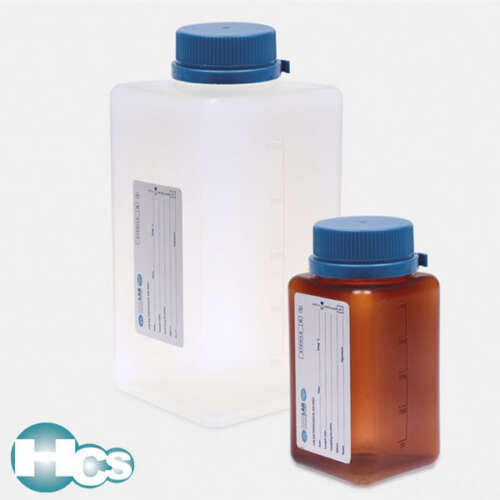 Manufactured from polypropylene for taking, transporting and storing of water samples for microbiological analysis. They can be used for all analysis where a sample is required. Bottles are manufactured at aseptically sterile production halls and then sent to gamma sterilization. Square bottle form offers easy handling and optimum spacing saving solutions. GL50 wide bottle neck provides easy filling and pouring. Cap with large ridges with increased grip featured with self lock and internal security ring. Cap inner design ensures hermetical and leak-proof closure. Caps are made of polyethylene. Embossed volume graduations on wall side offer better liquid level viewing. Clear bottles are manufactured from very clear P.P resulting with high transparency and for better view of the bottle content. Amber bottles are manufactured from special formulated P.P preventing UV light penetration into the flask yet still offering high transparency.
 -
 Manufactured from heavy alloy with different internal diameter for perfect fit to the necks of various volume erlenmeyers and flasks. Can fit nearly around the neck of erlenmeyers and other flasks preventing falling over or floating risks in water baths. Soft vinyl coated ring surface prevents scratching the glass surface during use.
 -
 Manufactured from HDPE, the stackable tank has a high resistance to organic and inorganic acids. Robust with lifting lugs and strengthening ribs to ensure long life.
 -
 PMP staining jar holds 76x26mm (3"x1") slides vertically. Eight grooves. Supplied with PMP cover. Can accommodate 16 slides back to back. Xylene can cause etching after 2 days at room temperature.
 -
 Art. 351 Internal Dimension 76x65x45mm PMP staining jar for 76x26mm (3"x1") slides. Ten grooves. Supplied with PMP cover. Can accommodate 20 slides back to back. Xylene can cause etching after 2 days at room temperature.
 -
 Molded in PMP for use with Art. 354. Supplied with 2 lids - one lid for use when dish is not in use, providing evaporation-free storage of staining liquid - the other lid with special opening to allow handle of staining rack Art. 354 to be inserted; Xylene can cause etching after 2 days at room temperature.
 -
 Staining rack made of PP with horizontal tray, holds 20 slides 76x26mm (3"x1"). For use with Art. 353
 -
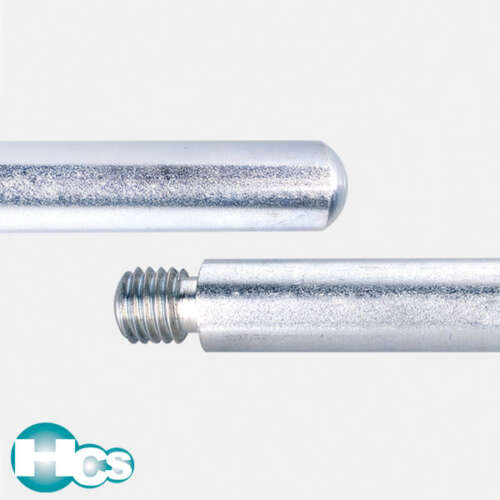 Manufactured either from galvanized steel or stainless steel with a M10 thread.
 -
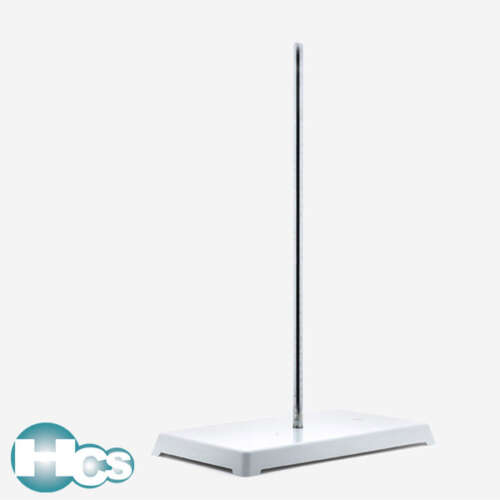 049.04.175 Highly stable rectangular base manufactured from ABS. Base with dimension 175 x 300mm has two rod holding holes. Same rod can be placed either at the center or at the rear of the base. White base color allows a perfect visual observation of color changes during titration applications. Delivered with a screw-in support rod of 600mm height.
 -
 Manufactured from acrylic with ergonomic angled body form with adjustable pipette holding option. Can be used with most pipette brands. Depending on the stand size enables easy holding and handling of 4 or 6 single channel pipettes.
 -
 Manufactured from polypropylene for using with most common micropipette brands. This space saving, robust stand can hold up to 6 pipettes comfortably. The round carrousel stand can rotate 360° around the axis enabling easy reach of any pipette.
 -
 Manufactured from polypropylene for using with most common micropipette brands. Offers practical and easy direct access to micropipettes. This space saving, robust stand can hold up to 6 pipettes comfortably.
 -
 Grade 301 is the slowest of the qualitative papers. This grade is used in qualitative analytical techniques to determine and identify materials. It is also extremely efficient in retaining very fine particles. Grade 301 is generally used for biological products, water analysis, soil analysis and fine precipitates such as cold precipitated barium sulfate. Grade 301 is additionally utilized with Buchner funnels and to clarify cloudy suspensions and wine.
 -
Grade 302 is a thick smooth paper, suitable for the removal of fine particles. This paper is made with 100% pure cellulose fibres that have been strengthened to resist the pressure when they are used in filter press systems. There is therefore no contamination danger during transfer steps. This high absorbency grade is twice as thick as Grade 301 with a bigger pore size. The extra thickness gives higher wet strength and loading capacity, enabling more precipitate to be held without clogging the filters and better handling. Grade 302 is also highly suitable for use in Buchner funnels and dye filtration.
-
This grade has a larger pore size than Grade 301, but with a lower filtration speed. Grade 303 also has higher absorption than Grade 301 is it used in general laboratory applications. Grade 303 is also found in agricultural and environmental laboratories for plant growth trials, soil testing and air analysis for monitoring specific contaminants and in the filtration of organic and sulfide precipitates.
-
This grade covers a wide range of laboratory applications and is used for clarifying liquids and for rapid filtration of coarser precipitates such as lead sulfate, lead chromate, calcium oxalate, calcium carbonate, aluminum phosphate, barium carbonate and beryllium hydroxide. Grade 304 can be found in soil analysis, seed testing and in air pollution to collect dust-laden air and is also commonly used in the food industry to separate foodstuffs from the associated liquid of extracting liquid.
We have retired the old website, please let us know if you encounter any issues here


Tel: +65 6777 7077
Email: marketing@hcs-lab.com
Tel: +65 6777 7077
Email: marketing@hcs-lab.com

Get in touch with us today for any inquiries, assistance, or collaborations. We’re here to help!


Copyright ©2026 | HCS Scientific & Chemical All Rights Reserved
